
Is It Possible to Over-Prepare for a Job Interview?

As Seen In:






Preparation is a cornerstone of job hunting. If you show up underprepared for a job interview, you rarely leave a strong impression. That’s why researching the company, reviewing the job description, and reflecting on your achievements is critical.
But here’s a question many professionals ask: is it possible to over-prepare for a job interview?
At ResumeSpice, with hands-on real-recruiter experience in interview preparation and career coaching, we’ve seen even highly capable, mid-executive professionals fall into the trap of over preparing. When preparation turns into scripting, candidates can come across as rehearsed or robotic—and if the interview process takes an unexpected turn, that rigid prep can cause people to freeze instead of adapt. The goal isn’t to sound perfect; it’s to sound real, confident, and capable. Let’s break down the key do’s and don’ts of interview prep that actually help you perform better.
Key Takeaways
Avoid memorizing scripts: Over preparation can reduce authenticity and flexibility.
Highlight strengths and relevant experience: Prepare examples that align with the job description.
Engage naturally with the interviewer: Hiring managers notice positive, interested, and engaged candidates more than perfectly rehearsed answers.
📌 Prepare, but Don’t Memorize
Many candidates spend hours practicing answers to common interview questions, writing out responses word-for-word, and treating the actual interview like a performance. The result? Rehearsed answers that sound robotic.
Instead, review common interview questions and jot down bullet points you want to convey. Focus on key achievements and measurable examples using the STAR method or STAR format. Practice speaking naturally to your points so you can adapt to unexpected questions from the interviewer. For a more in depth look, check out our blog that covers How to Prepare for a Behavioral Interview: STAR Method, Common Questions, and Expert Tips.
🤝 Recruiter Tip: A few well-prepared bullets are far more effective than memorizing every word. This approach allows you to respond authentically while still conveying confidence.
📌 Speak to Your Strong Points
Before the interview, take stock of your experience and skills. Know what makes you stand out so you can answer specific questions with examples that show impact. Here’s what we recommend…
Curate 3–5 STAR stories: Select examples of projects, problem-solving, or leadership moments that demonstrate measurable impact. Tie each story to the company’s mission and culture so your relevance is clear.
Craft a concise elevator pitch: Prepare a short, compelling answer for “Tell me about yourself” that highlights your strengths, achievements, and what excites you about the role—without memorizing a script.
Anticipate role-specific questions: Review the job description and think about the skills, challenges, or outcomes the role demands. Prepare examples that speak directly to those priorities, showing the hiring manager you’re ready to contribute from day one.
🤝 Recruiter Tip: Framing your strengths around the role makes it easier to communicate fit, stand out from other candidates, and convey real value—without sounding rehearsed.
📌 Remember P-I-E: Positive, Interested, Engaged
Being prepared isn’t just about having the right answers—it’s about how you show up as a professional.
Hiring managers notice more than your resume or STAR responses; they’re evaluating your attitude, curiosity, and ability to engage in a conversation. Even two candidates with similar skills and experience can be set apart by how they carry themselves during the interview. That’s where P-I-E comes in: 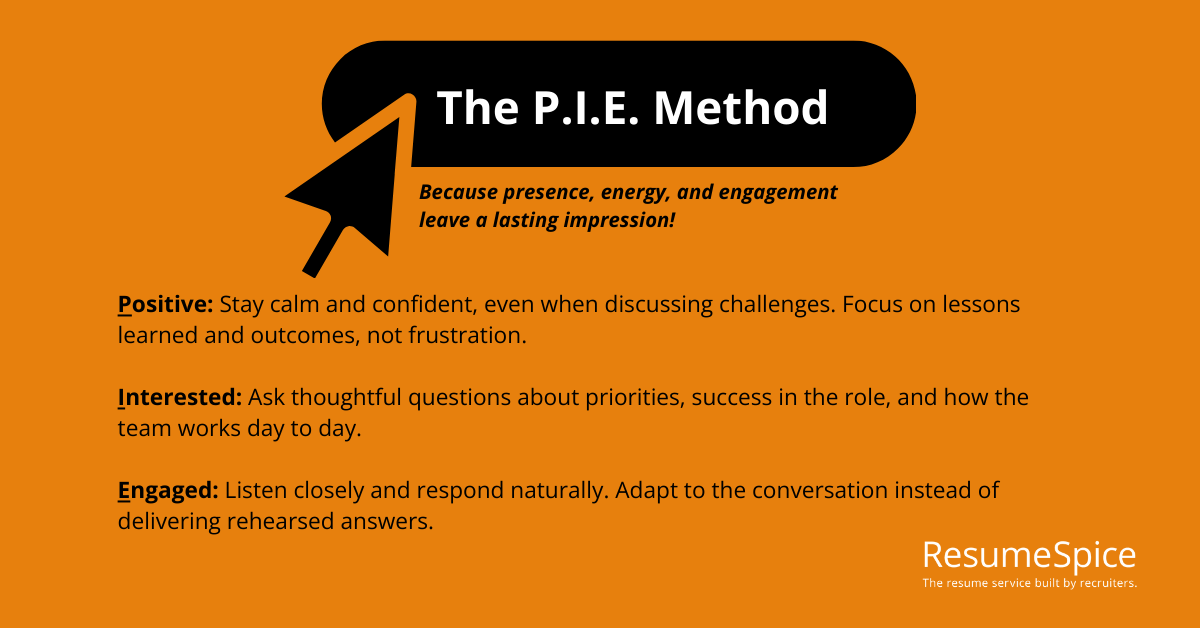
Remember: Hiring managers are looking for someone who can integrate with the team, tackle challenges, and represent the company well. Demonstrating P-I-E behavior often makes the difference between two equally qualified candidates!
📌 Be Yourself (Even Under Pressure)
Your resume may get you in the door, but your personality is what convinces a potential employer to make an offer. Over-preparation can strip your answers of warmth and authenticity.
Share examples in your own words, let your enthusiasm shine, and don’t fear small pauses—they are better than rushing through interview responses.
🌟 ResumeSpice Insight: Career coaching or a mock interview can help you practice being authentic while still prepared, building confidence for all those nerve-wracking moments. Additionally, for additional support, we recommend you take a look at our blog that outlines How to Project Confidence in Interviews: Top Tips for Success!

When to Bring in Expert Help
Even experienced professionals can reach a point where preparing alone stops being productive. If your interviews start to feel inconsistent, high-pressure, or you’re getting positive conversations without offers, outside perspective becomes a strategic advantage, not a crutch.
Working with an career expert gives you real-time insight into how your approach may be landing with the person on the other side of the table. Instead of guessing what to change in your interview prep, you get direct, actionable feedback on your stories, delivery, and overall presence during the interview.
💪 This kind of support is especially valuable when you need to:
Sharpen interview responses so they clearly communicate impact (without sounding rehearsed).
Practice in realistic interview situations that reflect how hiring managers actually ask questions.
Build confidence in handling unexpected questions, pivots, and follow-ups during the actual interview.
➡️ Additional recruiter tips:
For professionals navigating a pivot, re-entering the market, or targeting more senior roles, stepping back can be just as important as practicing forward. Structured career assessments help clarify positioning, strengths, and direction so your resume and career strategy all tell the same story.
Many candidates also benefit from ongoing career coaching to refine messaging, confidence, and long-term strategy across multiple interview situations.
Because ResumeSpice was built by recruiters, the focus is always on what hiring managers actually listen for, how decisions are made, and how to show up as a strong, credible candidate — not just a well-prepared one.
Smart, Targeted Interview Prep & Moving Forward With Confidence
Interview preparation doesn’t need to be overwhelming to be effective. The real goal is to walk into the interview feeling confident, grounded, and ready to talk through your value in a way that feels natural, not rehearsed. Strong interview preparation supports clarity. Over preparation, on the other hand, can flatten your delivery and make conversations feel stiff or overly scripted.
The most important thing is balance. You want enough preparation to feel informed and composed, while still leaving room for flexibility, curiosity, and authentic conversation. Hiring managers aren’t looking for perfect answers. They’re looking for capable professionals who can think clearly, communicate well, and connect their experience to the role in real time.
By focusing on your strongest achievements, understanding the job description, and practicing how you talk through your experience, you can convey confidence and credibility without sounding robotic. This approach consistently leads to stronger interviews and a more lasting impression with potential employers.
📌 Here’s how to prepare for an interview effectively, without overdoing it:
Review the job description and identify 3–5 achievements that directly align with the role’s priorities and challenges.
Outline key talking points for common interview questions and role-specific scenarios, focusing on impact rather than memorized responses.
Practice framing answers using the STAR method to clearly communicate results, leadership, and problem solving.
Research the company culture and mission enough to understand context, but avoid memorizing facts or scripting references.
Prepare thoughtful, relevant questions that demonstrate interest in the role, the team, and the company’s direction.
Conduct a mock interview with a career coach or trusted mentor to receive honest feedback and refine your delivery.
🌟 Recruiter Tip: When you strike the right balance between preparation and authenticity, interviews feel less nerve-wracking and more like professional conversations. That confidence is often what separates strong candidates from others with similar experience—and helps hiring managers remember you long after the interview ends.

Q&A
Q: Can I over-prepare for a job interview?
A: Yes. Too much preparation can make you sound rehearsed and rigid. Focus on bullet points, key examples, and adaptability rather than memorizing answers.
Q: How do I showcase my achievements without sounding boastful?
A: Use measurable examples tied to problem solving and outcomes. Frame your STAR stories in the context of value delivered to previous employers or projects.
Q: What if I freeze or blank during a mock interview or actual interview?
A: It’s normal. Pause, breathe, and return to your bullet points. Practicing with a career coach or mock interviewer can build resilience and confidence for unexpected questions.
Q: Do I need to be a LinkedIn influencer to impress the hiring manager?
A: No. Strategic sharing of achievements or insights—even selectively—demonstrates visibility and leadership without being performative.
Ready to Maximize Your Interview Prep with a Professional?
Do you need more help preparing for interviews? Call the team at ResumeSpice! Our team of career consultants and career coaches can help you prep for any interview situation. Contact us today to get started.